


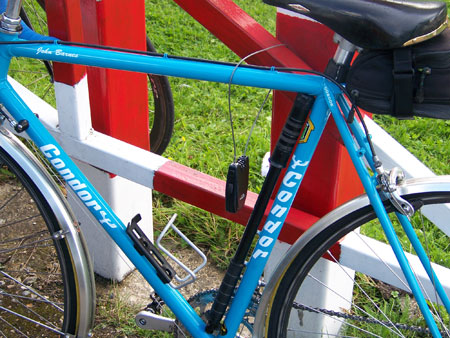
In the past 15 years, I’ve had two bikes stolen; which is probably about average given the depressing UK bike theft statistics.
My first bike was stolen when I lent it to my sister, who lent it to a friend, who didn’t lock it. It was quite a nice mountain bike, I never got a new Mountatin Bike.
My second bike was a trek 1000; a pretty flash commuting bike. I locked the bike to itself; i.e. put a D lock between wheel and frame and kept it behind the back of a house. When I looked, 1 hour later, it had gone. Presumably, someone had followed the bike brought a van and carried it off in the back. The audacity is amazing, but, it shows the old adage you need to lock the bike to something solid.
These are some Tips to Minimise Bike Theft.
- For commuting purposes don’t use a flashy, expensive bike. If you are always locking up a bike in a public place, a cheaper / older bike makes a less attractive target.
- Lock to Something Solid. As my experience shows, locking a bike to itself leaves it vulnerable. If you go into the shop for 5 minutes, it is better than nothing as someone can’t just ride off. But, locking to something solid is important for better security.
- Never Assume an Area is Safe. People sometimes feel that the countryside will be safe. However, I’ve heard many accounts of club cyclists having their bike stolen after it has been left outside a cafe. At the very least use a flimsy lock. It could easily be cut through, but, would deter some thefts.
- Lock for the Bike should be sturdy. A simple rule of thumb is spending 10-15 of the cost of the bike on the lock. E.g. a £200 bike – £25 lock. A £400 bike £40
- Keep Bikes Inside Locked. Your best bikes should be kept inside out of sight and locked to something. There are useful D rings which you can attach a bike to.
- Have bike registered, noting down frame serial number for easier replacement


No comments yet.