
Entries Tagged 'training' ↓

Training for Charity Cycle Ride

smiling-cyclist

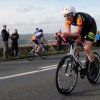
Cyclist on Road

Readers Question: After many years out of the saddle I have decided to get back into cycling and have entered the London to Southend Charity Bike Ride (100Km). I started training at the end of March and now do 3 x 10 miles rides in the week and I’m upto 30 miles at the weekend (adding 4 miles every 2 weeks to the weekend ride).

What do you suggest is the mileage I need to get to so that I can achieve the 100km ride on 19th July, am I doing enough training and what would you suggest for a training schedule in the last 2 weeks before the ride and what type of diet should I follow in the week preceeding the ride?

It sounds quite a sensible training plan. With 2-3 months training under your legs 100km won’t seem so bad. Ideally, for a 100Km ride you would have done a distance 60-70% of final distance. Two weeks before ride might be a good time to do a longer ride than usual. If you are reasonably comfortable riding 60-70km, the jump to 100Km won’t seem that much.

I don’t think you need a special diet in the weeks leading up to the ride. However, people often underestimate how much food they need to take on when cycling. For a 100km ride you will want to be taking on food during the ride. A good breakfast and then a couple of bananas and cereal bars during the ride are ideal. Often when people run out of energy on long rides, it is lack of food / water as much as lack of training. (cycling and food)

When you reach a certain level of fitness the distance you can cycle is only really limited by the amount of food you can take on.

For example, someone training for a 12 hour or 24 hour time trial aiming to do 250 or 400 miles, may do a weekly ride of 100 miles. But, it is not necessary to have ridden full distance.

If I was training for a 100 mile time trial, I would be more concerned at developing speed for riding 25-50 miles quick than I would in riding lots of 100 mile rides.

Riding 100 Km Unprepared

Some people may find they are down for a 100km ride and despite best intentions have done little training. I think if you have done no cycling, 100KM would really not be advised. You could probably just about crawl around and cycle 100Km, but your legs would feel painful for the next 3-4 days and I doubt whether it would be enjoyable.

If you have been doing training of 50-100Km a week, you will probably be fine in completing a 100km. Just take it steady, especially in opening miles. There is a huge difference between riding 100km fast and riding 100km slow.

Sometimes I ride 70 – 80 KM and it is effectively a recovery ride because I am just riding at a gentle pace and not doing any intervals.

Related

Fast Ride Becomes Slow Ride

Sometimes I go out with the intention of having a fast training ride, but, when I start cycling I don’t feel like it, so it ends up being a slow ride. At least it gives you chance to admire the scenery and take the odd photo, like the one above.

If you really don’t feel like training hard, there’s no point making you do it. So long as you don’t feel like going slow every day!

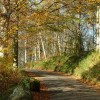
green

For all our rain, England is pretty green place

How to Make Training Fun

start-hill-climb

Start of hill-climb

I see cycling as a hobby more than anything. I race throughout the season, but, spend far more time training than racing. I don’t see training as a means to an end but often enjoy the training as much as the racing. If you spend 10-15 hours a week training it is important that you enjoy it. Often we are putting more thought into the goal than in the method of getting there.

These are some tips to Enjoy Training

Don’t Just Think of the Goal.

It’s good to have targets, especially if you want to take racing seriously but look upon training as an integral part of your cycling. If you just train because you want to win a race or complete a cycling sportive, training becomes a duty and responsibility. It becomes like work where we only do it to get paid at the end of the day.

Be Careful What You think about.

When you’re riding on your own for 2 hours or more, it is a real pain if your mind gets into a negative spiral. You start inwardly complaining about the injustice of bad drivers or dopers in sport and before you know it, you’ve spent 2 hours with negative thoughts going around your mind. Thinking to yourself about bad things isn’t going to change anything, but it will make you more miserable and you won’t enjoy your ride. The best thing is to cut off the train of thoughts early. I really try hard not to think about the dopers in procycling as it sets of my mind for ages.

Train in the Way You Enjoy.

I just love cycling up hills. I don’t know why. Especially long, gradual climbs. Often I ride 15 miles to Stokenchurch so I can climb up a 2.2 mile climb on the old A40. But, if someone gave me an interval training schedule for a turbo trainer, I would be depressed just thinking about it. I have tried training on a turbo, but, it seems like an eternity just to do 20 minutes. I’d rather get wet and risk traffic than be stuck indoors in my garage.

Morale Boosters.

One of my favourite training schedules is to pick a windy day. Then find a nice flat road with a strong tail wind. Then just do a short intense effort with the wind at your back. This gives you a great feeling of speed. Your training really hard, but, you get a great feeling of speed as well. True you have to ride back with a head wind, but for this you just stop looking at your speedometer. For example, the other day, I rode a flat 6 mile stretch with tailwind in 11 minutes – average speed 31 mph. It was great fun riding so quickly! Similarly when do hill intervals I like to pick a hill with gradual gradient and tailwind, then when you do your interval you feel you are flying up the hill.

Train With A Specific Target.

If you want to ride just to enjoy the ride that is fine. But, if you want to ride to train – have a specific goal in  mind. Either see it as a recovery ride, or a ride to stretch and improve yourself. It is good to have certain distances that are timed so you can measure improvements throughout the year – getting seasonal pbs e.t.c Being focused in training gives it more value.

Training with other people.

Training with other people is great for longer rides. The company helps the mind from going round with its own useless thoughts. It is important to find cyclists with similar aspirations and similar standards. If you’re a racer you might be frustrated with CTC rides which can have a maximum speed limit.

The After Effects of Training.

Often training can be hard, but, after finishing the ride you get a feeling of real satisfaction. Even in your fatigue you feel a sense of achievement and purpose. This is one of the great things of cycling. The after effects of a hard day in the saddle give you a good feeling. This is something to remember if the actual riding is hard.

Don’t Worry about Rigid Training Regimes.

I have sometimes bought books on training and they have pages of training plans like 10 mins at 75% HR, then 10 minutes at 85% HR, then 10 minutes at 80% HR e.t.c They can seem complicated and difficult to remember. But, I don’t think it is indispensable to follow these very prescriptive and detailed plans. Have confidence to go on feel, cycle fast when you come to a hill. Rest going down the hill.

Related

Training this Week

Time Triallist

Time Triallist

Saturday was another 10 mile time trial on the H10/8 organised by Farnham RC. I got a season’s best by 3 seconds – very slowly getting faster!

This week’s riding

  • Saturday 9th – 10 Mile TT 21.33
  • Thursday 45 miles – 2 hr 30 mins av 19.5mph
  • Wednedsay 45 miles. 4 intervals up 2 mile hill. 4* 6 mins
  • Tuesday 28 miles. 11 minutes at race pace with wind behind for 6 miles
  • Sunday 1 hour gentle ride

A Week off the Bike

bike

Testing ice cream by Lake Garda, Italy.

Being in NY was not easy for cycling, The weather was cold and I got a cold – either from the weather of the plane’s air conditioning system on the way back. The result is after a good March I’ve had over a week off the bike. It might not seem that much, but, it feels a long time when you’re about to start racing.

My first race of the season is on Saturday a 10 mile time trial. I don’t like racing when I haven’t been fully fit. But, I need to start racing to develop more race speed.

Riding with a cold.

I’m not sure about the conventional wisdom of riding with a cold. But, I tend to rest. I might go out today, with the tailend of a cold to stretch my legs. Just a bit of a runny nose, but, I feel fine so I’ll try a short ride and see.

Training in Cotswolds

last Thursday had a good training ride with Chris (Oxford city) Flavio Zappi (Geoff Thomas Foundation) Henry and Nells (Oxford Univ CC), Dexter Gardias joined us just after this photo near Long Hanborough,

It was about 62 miles in just under 3 hours, I was a bit antisocial attacking on the way back on the climb out of Charlbury; and enjoying a very strong tailwind we flew back to Oxford at an average 25mph or so. It was very fast and a good work out, with Flavio enjoying a ride on my back wheel. But, when you get a strong tail wind, I really enjoy pedalling home quick! It makes you think you are faster than you really are.

Bit of a knee problem next day so I have an appointment with a physio this week. But, I've been riding in Yorkshire over this weekend.

Spring Training Camps

training

Spring cycling in Oxfordshire – on the way back from Stadhampton.

Last week in England was really good weather, it was the first ride of the year in shorts. After a long winter it’s great to see some good weather for a change. When the weather is good, there’s always part of me itching to get our riding; it becomes painful to have stay inside teaching economics. Who needs a training camp in Mallorca when you have weather like this? However, as I write this post on Sunday for Tues publication, I wouldn’t be surprised if the weather has changed by then.

I’ve been having small discomfort in the knee, so I’ve been riding alternate days. When I do ride I’m generally training hard. Last Wednesday I cycled 55 miles which included 3 long hills riding as fast as I could. I’m also doing a few 10 mile time trials (timed by myself). I’d like to spend more time just riding the bike. My teaching term finishes at the end of the week and I will take the bike up to Yorkshire where (knee willing) I will be able to have long training week of 300 + miles.

Cycle Training Tips

training

I love training almost as much as racing. I think to enjoy training is a very important aspect. If you have motivation and enthusiasm; if you are positive about riding, then you are going to make much more progress than if you just feel you need to churn out the miles to meet some training target.

These are some of my training tips

Realistic Plan. I’m not a great believer in writing out complicated plans and ambitious training schedules. I like to retain a certain flexibility. But, at the start of each year / month / week, I try to be conscious of what I want to achieve in that particular week / month. For example, at the start of March, I want to get prepared for the first races, by doing some hard hilly rides in preparation for the hilly time trials.
Flexibility. It’s important to be flexible. Don’t train when over tired. Don’t fret over losing a day. If you feel strong and have more time, push yourself a bit harder.

Train Hard. We are striking a balance between stress and recovery and avoiding over training. But, if you really want to make progress, you need to train hard. I rather like Emil Zatopek’s philosophy. He said he tried to run really fast for a long time. It is said he did some interval sessions for upto 90 times

“Why should I practice running slow? I already know how to run slow.
I want to learn to run fast.”

- Emil Zatopek

Ride by Time / effort not distance speed. Speed can be confusing. On a dual carriageway with tribars you can float along at 25 mph without much problem. But in the middle of winter, on a cold windy day on  your winter training bike the same effort level may give you a speed of 16mph. Don’t be demoralised by the low speed. I actually love the switch over from winter to summer training bike around April when suddenly with warmer weather and faster bike, you can add an extra 1 mph to your speed.

Be careful of weight training.
Some advise weight training as a great way to increase power and strength, especially in the winter. The key is not to strain your muscles, but, go for medium weights with many repetitions. As a cyclist you don’t need chunky leg muscles. Just see some of the top climbers who are very ‘wiry’

Keep a training diary
. I find it fascinating looking back at training rides to see how a season develops. It encourages you to stick to a regular training scheme and measure progress. For example, in February I may do a test 10 mile TT to find how I am going. I am always shocked to do something like a 26 minute 10. It feels painfully slow. Yet, in a few months, I will be doing a 21 minute 10. A training diary can give you a few clues to progress and also  encourage you to keep regular training.

Train with other people. I spend alot of my training time on my own. But, it is good to have 1 or 2 training sessions with other people. It provides company to help pass time on long base mile training sessions. It can also help you push yourself to your limits. When you are with other people, your natural competitiveness will come to the fore and this will help you train harder. Everyone is different, but, it is good to train with others, at least part of the time.

Tapering. To really get the peak performance it is important to taper for some key races. This basically involves reducing the duration of training to keep you fresh. However, at the same time you can’t taper for every race as you will not make enough progress. Some races you will be doing after a heavy training week.

Bring Newness into Training. Don’t just do the same training rides every day. Variety helps to keep a sense of newness. In winter don’t think you have to spend 3 months staying at a heart rate of 65-75%, it will do no harm to ride fast up a few hills. Look for new hills or routes to do interval training on. Even buy a mountain bike and do some off road training.

Blocks of sessions. The key to good training is periods of stress followed by recovery. After a very hard interval session, have a day or two of easy riding, to allow the body to recover. Similarly don’t churn out a high mileage week every week. After a high mile week have a lower mileage week

Stretching. Good stretching helps retain agility and flexibility, especially important as you get older…

Good warm up. Take at least 20 minutes of light spinning before you do intense work. This lessens the chance of injury. Similarly you need  a good warm up to the season, with a good base of miles before any interval training.

Short training sessions can make a big difference. If you are very busy, even training for 30 mins to 1 hour can make a big difference to retaining fitness. If you stop quickly after 10 days, your fitness will deteriorate rapidly. It takes 3 times as long to regain what you lose. Even training for 30 minutes can help retain your fitness.

Cross Training. I’m not a great fan of cross training, but, it has many advantages especially if you can’t cycle for some reason. The best form of cross training is swimming followed by walking up stairs.

Training in the wind. For psychological reasons I like to avoid setting off with a strong tailwind. I would rather ride into a headwind and cycle back with a tailwind. If the wind is very strong try to ride into a cross wind.

Sitting on Wheels

two-bike

It has been a frustrating start to the year with holidays, crashes, colds, rainy weather. The other day I went for a ride with Flavio. We did about 60 miles in just over 3 hours, with 2 testing climbs around Stokenchurch and Henley. On the way out there was a headwind and after the second climb, I was feeling the lack of miles in my legs. So rather than ride two a breast I just slipped back and sat on his wheel. It’s amazing the rest and recuperation you can get by sitting on a wheel. We were on a flat road back from Watlington, with a slight tail wind. For about 7 miles, I was just sitting there whilst Flavio kept a constant tempo of 38-40kmph. Cycling is really great when you can effortlessly sail along at 38kmph.

Well, I’m more inspired to do some training now

Managing Our Time

new college lane

One of the difficulties facing any cyclist is finding enough time to train, prepare and ride. In today’s hectic lifestyle it is pretty tough to devote 15 hours a week to cycling.

Cycling can be a time intensive sport. In winter it can take a good 30 minutes to get all the winter clothes on, prepare the bike and then clean it after a muddy ride through country lanes. If you want to do any distance – be it sportives, road races or medium distance time trialling you need to spend a certain amount of time on the bike. You really need to do at least one 3 to 4 hour ride a week. Even if you train very efficiently and train at high intensity, you still need to find time for 4 -5 training rides. A good cyclist will want to spend 10 – 15 hours a week on the bike. Then, on top of that, you have all the time in preparation / cleaning your bike and getting ready. – If you have a full time job it’s a pretty big chunk out of your free time.

What can we Do to Maximise The Efficiency of our Training time?

1. Commute.

Commuting by bike rather than the car or train can effectively ‘creates time’ for training. Not only do we get to work by bike and save money, but, we can get some training in whilst getting to work. If you are a really serious cyclist, you might actually plan the place where you live to be a suitable distance from your place of work. The disadvantage of training on a commute is that:

  • You will be sweaty on arrival at work.
  • Your journey probably involves many junctions and lights not suitable for consistent training
  • If you live a long way from work and rely on your bike, you can become overly tired or struggle when weather is really bad or when you are ill.

However, commuting can be an excellent way of getting some base miles in. These factors make it much better:

  • If you have somewhere to change at work, it becomes much better because then you don’t have to worry about being sweaty all day
  • The route into work is reasonably safe / conducive to cyclists.

2. Turbo Training.

Many modern training manuals stress the importance of ‘quality’ over quantity. In other words, it’s not the hours we spend on the bike, but, what we do when we are on it. Even short training sessions of 30-60 mins, can be effective in increasing our fitness / speed, if we are training at the right  power / intensity / heart rate. Turbo trainers make it more efficient to train in the right target zones because we can just jump on and get to the right target zone. Turbo trainers need less maintenance and we can avoid that first 20 minutes of slow riding to get out of a city boundary.
Continue reading →