Entries Tagged 'procycling' ↓

Lance Armstrong Story

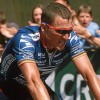
Sunday was a good day. First I suffered in the 100 mile race. Then I return home to watch others suffering on a much larger scale. It wasn’t just the usual suspects suffering on the mountain passes (the sprinters like Cavendish) but no less than the global phenomena of Lance Armstrong. Even the greatest champions have their time, the day when they lose that aura of invincibility. I have to say I enjoyed it greatly seeing Armstrong suffer. It’s not a very noble sentiment, but after suffering myself I didn’t feel too guilty.

I watched pretty much all of Armstrong’s seven consecutive Tour de France victories. I could never root for the American, I was always supporting any rival – from the overweight Ullrich to the diminutive Pantani. Fortunately or unfortunately Ive always judged cyclists on their attitude to doping – I’d rather cheer for an eighty year old amateur plodding around a club 10 mile TT than the most successful cheat. To the ITV commentators, slavish in their praise, Armstrong was the greatest of all champions. They can only see the greatest ever cyclist who won seven titles at the world’s most challenging cycle race. But to me, Armstrong will always be the guy who chased down Fillipo Simeoni for turning ‘tailcoat’, the cyclist who celebrated his Tour win with controversial doctor Michael Ferrari e.t.c.

Maybe I’m being unfair, maybe he was just unfortunate to be born in the EPO generation; a time when the number of clean cyclists could be counted on the fingers of one hand. If you look at his main competitors and team mates of those early 2000s, – Ulrich, Basso, Vinokourov, Landis, Tyler Hamilton (and many more) they have all been implicated in doping practises. Armstrong comes out relatively well, (if we ignore testimonies from former team mates and outdated EPO tests from 2001). However, for me what sticks in the mind, is not so much doping, but, to actively  persue  those who spoke against doping – Christophe Basson, Fililpo Simeoni. That is the really bad thing. It’s one thing to dope, it’s another to try and force out those trying to change the sport. For me the great heroes of cycling are those like Paul Kimmage who are willing to give up everything by ‘spitting in the soup’. They have more courage than those who only think of sweeping problems under the carpet and maintain an illusion that everything is fine.

I’m sure Armstrong has many good qualities, and if I wasn’t a cyclist I’d probably find it much easier to appreciate them. But, I am a cyclist and I really hate the practise of doping which has so blighted the sport, and the lives of those involved. A real champion could have used his position to move the sport in the right direction, not hang around with doctors whose main reputation was for being an expert in EPO.

But, when all is said and done, you do have to have spare at least some admiration for anyone who come back to ride and suffer in the Tour at the age of 39. Now, he’s been beaten he will at least probably become more popular, at least in Britain and France where we never really warm to someone until they display frailty and the ability to be a good loser.

List of Tour de France Winners 1903 -2009

Despite breaks for the two world wars the Tour de France has been held every year since 1903. It is not the oldest cycling race. But, it is the oldest and most prestigious stage race. All the great names of professional cycling can be found in the list of Tour de France winners. 5 Cyclists have the privilege of winning the Tour 5, or more times.

  • Jaques Anquetil, Eddy Merckx, Bernaud Hinault, Miguel Indurain and Lance Armstrong (7 times)
  • 1903 Maurice Garin (France)
  • 1904 Henri Cornet (France)
  • 1905 Louis Trousselier (France)
  • 1906 Rene Pottier (France)
  • 1907 Lucien Petit-Breton (France)
  • 1908 Petit-Breton
  • 1909 Francois Faber (Luxembourg)
  • 1910 Octave Lapize (France)
  • Continue reading →

Why Are Drugs Cheating?

Readers Question: I don’t know the answer to the following question, and it bothers me. What is the difference between trying to gain a competitive edge through doping and trying to gain a competitive edge by using better equipment?

Firstly, doping is prohibited. There is a long list of prohibited substances athletes can’t use. Using better equipment (within UCI rules) is legal. Doping is cheating, using better equipment isn’t.

But, another question my boss at work often likes to wind me up with is  ‘I don’t know why cycling doesn’t just allow drugs so there’s a level a playing field. He says it half in jest but half in seriousness. But, whilst he laughs it off, it is no laughing matter for all the athletes who died prematurely from drug misuse.

Firstly riders can be racing upto 150 days a year. To legalise drugs would mean athletes taking considerable quantity of drugs.

1. Drugs Damages Mental Health.

There is no doubt in my mind that prolonged drug use, damages mental health. Marco Pantani, Jose Maria Jimenez are high profile cyclists who slipped into a drug related depression. In Paul Kimmage’s book he points to many of his former racers who suffered from prolonged amphetamine use.

2. Drugs damage Physical Health.

In the height of the EPO craze, cyclists were taking so much EPO they were ending up with ridiculous heamocrit levels of 60% and more. Their blood was so thick that they had to set their alarm for 3am in the morning. It was necessary to stretch in the middle of the night otherwise they risked never waking up because their blood was so thick. Some people will say legalise drugs, if they are safe. But, the safety or danger of drugs may not be apparent until it is too late. Often the effect of drug taking is cumulative meaning the athlete’s health is at risk after his career is over and people have forgotten about him / her. Why risk lives for no point?

3. No Level Playing Field.

People argue legalising drugs would create a level playing field, but  it wouldn’t. People respond differently to drugs. For example, EPO has more effect on those with a naturally low hemocrit level. Also, it would mean the cyclists with the best doctors / pharmacists would win. All cyclists have access to excellent bike technology. The difference in bike technology between the top teams is all but insignificnat. But, not all cyclists would have access to the latest wonder drug.

5. Athletes need protecting from themselves.

In a study of Olympic athletes. A depressingly high % of athletes said they would take drugs that would guarantee them a gold medal even if it meant a risk dying after 5 years. Tom Simpson famously said “If it takes 10 [pills] to kill you, I’ll take 9.”  He probably thought he was making a joke, but it backfired disastrously as he collapsed on Mont Ventoux with alcohol in his blood and amphetamines in his back pocket.

When Richard Virenque was been tried in court after the Festina affair. He tried to claim the masseur Willy Voet gave him drugs without his knowledge. Willy Voet replied that if he had given Virenque all the drugs he wanted he would be dead by now.

There are many more reasons, but, put it simply would you want to join a sport where you had to risk your mental and physical health to have a chance of competing. If drugs were made legal in cycling, I would stop that same same day and take up clay pigeon shooting or something.

Athletes on drugs won’t make the spectacle any more interesting, if average speeds are 1mph higher what difference does it make to spectators?

Olympic Cycling Events

cycling

“Citius, Altius, Fortius.” – “Swifter, Higher, Stronger.”

The motto of the Olympics is a great inspiration. Yet, these days the Olympics deviates from this pure motto of athletic inspiration. We have events like synchronised swimming (though thankfully, the solo variety of synchronised swimming was not continued after 1992), even golf is going to be admitted in 2016

Anyway, I can live with these other events if the classic events of sport are left. I wouldn’t usually write on this topic, but, I feel it is the height of absurdity for the Olympic committee to abolish the great 4 Km pursuit event (and 3KM womens pursuit).

The 4Km individual pursuit is one of the classic events in the cycling programme. It is a simple test of power, speed and endurance for just over 4 minutes. Unlike many other track events, it is not one for the sprinters, but an event ridden by some of the top road cyclists, as well as the specialist pursuiters. It is an event ordinary cyclists can relate to and at the same time admire how the top riders can ride at just under 60kmph for 4 minutes.

Team events are good, but, the ultimate race is for the individual. I like the 4*100 Metre relay, but, it can’t compete with the individual 100 metres.

cycling
Chris Boardman in Olympic Pursuit.

The 4Km pursuit has been in the Olympics for many years, since 1962. Who can forget Chris Boardman’s triumph in Barcelone on his revolutionary Lotus bike in 1992? or Bradley Wiggins triumph in 2008. But, it is not the fact British cyclists have happened to won the event a few times that I want it retained. It is because it is a great event, with a great history and should not be shelved from the Olympic programme.

It is being replaced with an Omnium event, an event that no one has really heard of.

If swimming can have 36 medals for a huge variety of events and distances and 18 medals for wrestling, I don’t see why cycling can’t retain its blue ribband track event. It was bad enough to lose the 1KM pursuit, but to lose the 4Km pursuit as well is even worse.

The problem is that within cycling there is no individual event between the 500 metre sprint and the road time trial (around 50Km). This is wrong. There should be an individual distance between these two.

No one would suggest having 2 swimming events of 50 metres and 1,000 metres.

I really feel there should be some kind of Olympic heritage programme to protect significant events with a great history. That’s just my personal opinion of course, but I often don’t see the logic behind the decisions of the UCI (- don’t get me started on the world hour record – limited to 1979 technology or something like that)

Related:

Olympic Track cycling

Tour De France 2009

Tour de France

Tour de France - image by Hada

It’s that time of the year, when I try to summon up my will power and avoid spending 3 hours in the afternoon listening to what the Eurosport commentators had for dinner last night, and the history of the local Chateaux. It is of course, the 2009 Tour de France and what cyclist can remain unmoved by the great race across France and neighbouring countries?

Last year, I was pretty fed up with the whole procycling scene and I generally avoided watching all the tour on TV. However, despite, the innumerable reasons to despair at the procycling scene, you can’t help but be fascinated by the Tour and become involved in the gripping daily racing.

Also, you feel that this year, procycling is ‘cleaner’ that it has ever been for a very long time. After decades of brushing the dope under the carpet, efforts to stop doping at least seem sincere. It’s not to say there aren’t riders getting away with taking dope. But, we’ve come along way from the era of the 80s, 90s and early 00s, when the default seemed to be to take drugs.

It wouldn’t be the tour without some kind of scandal, so with low expectations I’m going to sit back and say chapeau to all the riders. (especially the Brits like Bradley Wiggins and Mark Cavendish – both riders I admire and both doing very well already.)

Cavendish Wins Milan San Remo 2009

Mark Cavendish won a thrilling sprint to take the 100th edition of Milan San Remo by the narrowest of margins.

Second place Heinrich Haussler surprised everyone by jumping the leading group of 40 riders with under a kilometre to go. He looked to have the victory in the bag, but Cavendish came back and took him at the line.

Milan San Remo

1 Mark Cavendish (GBr) Team Columbia – Highroad 6.42.45 (44,420 km/h)
2 Heinrich Haussler (Ger) Cervélo TestTeam
3 Thor Hushovd (Nor) Cervélo TestTeam 0.02
4 Allan Davis (Aus) Quick Step
5 Alessandro Petacchi (Ita) LPR Brakes – Farnese Vini
6 Daniele Bennati (Ita) Liquigas
7 Aitor Galdos (Spa) Euskaltel – Euskadi
8 Enrico Rossi (Ita) Ceramica Flaminia – Bossini Docce
9 Luca Paolini (Ita) Acqua & Sapone – Caffe Mokambo
10 Peter Velits (Svk) Team Milram

Lance Armstrong and Paul Kimmage

I have great respect for Paul Kimmage. He was one of the first professional cyclists to ‘lift the lid’ and speak about the culture of doping. For his efforts he was widely condemned and ostracised by the procycling community who closed ranks and denied doping was a problem. It’s taken innumerable doping scandals, failed dope tests, and admissions by champion cyclists for cycling to admit what everyone knew but was reluctant to say. In fact, Paul Kimmage’s revelations in a rough ride seemed relatively mild compared to the industrial and scientific doping levels of the 1990s and 2000s.

The re-emergence of Lance Armstrong on the pro scene has re-awakened many of these old issues. It has been exacerbated by the return of many failed dopers back into the peleton. I can’t hide by sense of disappointment that so many cyclists convicted of cheating have been welcomed back into the peleton as if they had just made an ‘honest mistake’. The problem is that failed dope tests are just the tip of the iceburg, we had so many confessions from cyclists who never failed dope tests (e.g. Bjanne Riis, David Miller) that the limitations of doping controls are still relevant.

Following Paul Kimmage’s questioning of Lance Armstrong at the recent tour of California, he has been getting a tough time in the American Media. It seems the American media have little time for awkward questions. But, this isn’t just a cycling issue, it can also be seen in the attitude to doping in sports like baseball and American football.

Everyone is a mixture of good and bad and Lance Armstrong has definitely done some good things. But, on the issue of doping, he has always disappointed me. Be it chasing down Fillipo Simeoni, working with Michael Ferrari or his acceptance of dopers and dislike of those who tried to get rid of doping.

Lance Armstrong and doping

Penalties for Drug Use

I’ll never forget the day, 2 years ago, when I just turned on Eurosport ‘for 5 minutes’ to check how the racing was going. Flloyd Landis had just broken away from the peleton and started one of cycling’s epic breakaways. Three hours later I was still glued to the set thinking I had witnessed one of sport’s greatest comebacks and procycling’s greatest days. After collapsing the previous day, Flloyd Landis had come back to win the stage in spectacular style and regain the yellow jersey.

His positive test was painful to say the least. Suffice to say that was the last year I watched the Tour de France on tv. It still seems only like yesterday, but already Lance Armstrong is welcoming Flloyd Landis back into the tour. A two year ban seems so paltry and pathetic. These people have ruined the sport, yet they get to come back and make more money and a mockery of the need to promote a clean sport.

I wonder whether Lance Armstong would be so keen to welcome a cyclist like Filipo Simeoni? – (a cyclist who spoke out against a doping doctor – Michael Ferrari) – I doubt Lance Armstrong would be so forgiving of the unpardonable sin of speaking against doping…

People might say people deserve a second chance, but, what about all the clean cyclists who were denied wins by the dopers? where is their second chance to gain their deserved victories? If you are a clean cyclist, it must be really gut wrenching the way dopers:

  • Rarely get caught (though you feel this is definitely improving with quite a few positive tests recently)
  • When they do get caught they are welcomed warmly back into the peleton as if nothing has happened.
  • Yet, those who speak out against doping, historically were permanently excluded from the pro scene.

If you are a young cyclist, there is almost a temptation to dope because the chance of getting caught is so low, and even if you do get caught you will come back soon. I guess that is why so many do it.

I don’t believe in holding a grudge against people. I do believe in forgiveness and giving people second chances. But, I also want to see much stiffer penalties for doping. Their should be a ban of 4 years, and the courts should try to take away their winnings gained through cheating.

Maybe I am being miserable, some people have no problem cheering for the likes of Richard Virenque, David Millar e.t.c. But, I just can’t raise any enthusiasm to see the likes of Landis, Vinokourov and Tyler Hamilton coming back into the sport.

Also, I don’t have anything personally against people like David Millar (at least he had a certain contrition – something I never saw from Landis), it’s the rules that need changing. That’s my rant for the month anyway.

Interesting article from a doping expert- that cycling gets a bad press.  I actually agree, compared to other sports, cycling has made huge strides in improving its fight against doping. Now we just need stiffer sentences.

Lance Armstrong Comeback?

Lance Armstrong

Lance Armstrong has announced that he intends to make  a comeback to procycling and would like to win one more Tour de France. At 37, he still has the physical capacity. (Raymond Poulidor came second aged 40 in the 1970s) However, it would also be interesting to see how he copes after 3 seasons off the bike. I’m sure he would struggle to dominate like he did during his 7 victories.

If Lance did return to the tour it would certainly make an interesting race. Whatever your opinion of the confident Texan, you can’t deny he is still the biggest name in world cycling.

Apparently he has signed up for out of competition drugs testing.

Lance Armstrong’s Motivation for Making a Comeback

On his website, Lance Armstrong says:

“…I have decided to return to professional cycling in order to raise awareness of the global cancer burden,”

In an interview with Vanity Fair, Lance Armstrong said:

“I’m going back to professional cycling. I’m going to try and win an eighth Tour de France.”

Lance hinted he was inspired by seeing some of the older athletes,  such as 41-year-old American swimmer Dara Torres do well at the Olympics.

He would also like to clear his name regarding doping allegations. He is aware that doping tests have become more stringent in the past 3 years. Since Lance’s departure, there have been a long line of high profile cyclists implicated in doping – often these were Lance’s main competitors – Ivan Basso, Jan Ullrich, Tyler Hamilton, Rasmusen, Flloyd Landis, Vinokourov (see: doping scandals in cycling)

Photo: Lance Armstrong on virage 5 of the climb to l’Alpe d’Huez, during stage 10 of the 2001 Tour de France. Public domain

Tour of Britain 2008

tour of britain

The tour of Britain is in the UK this week. In fact, yesterday it passed through my local training roads. Including  Streatley Hill a category 2 King of the Mountains  – a hill I have often raced on myself.

British cycling is definitely on the up, after a great Olympics performance. Local velodromes are saying that they are sold out. Many people are wanting to have a taste of the track, emulating the Olympic medallists. I hope that the enthusiasm and interest doesn’t prove short lived, but, becomes a permanent increase.

Just maybe, the better image of cycling may even translate into better attitudes to cyclists on the road. We can only hope… :)

Image by John Spooner, Flickr